


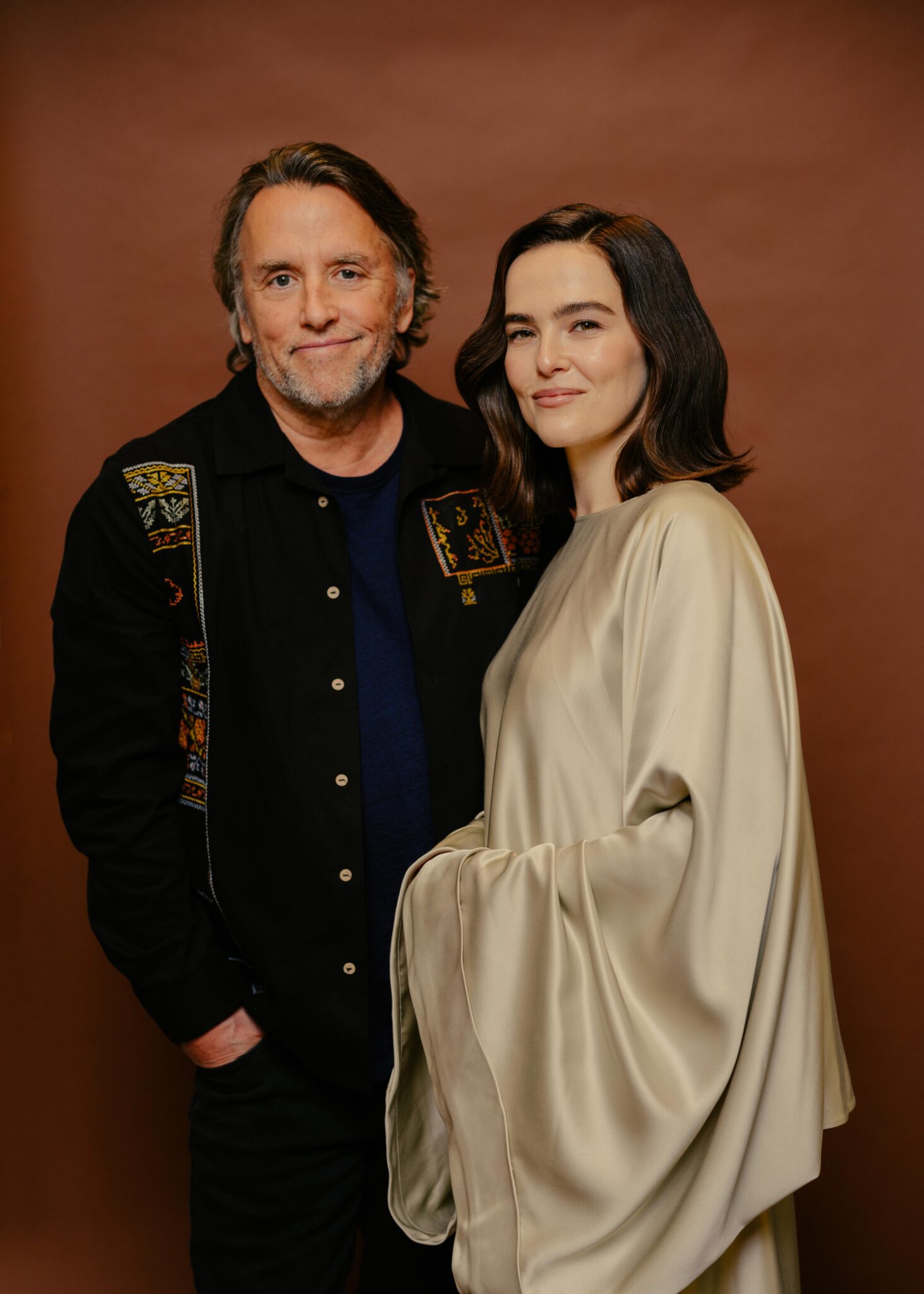
Richard Linklater’s “Nouvelle Vague” (2025) serves as a bridge between two eras of independent cinema, connecting the “guerrilla” energy of 1950s Paris with Linklater’s own philosophy of “hangout” filmmaking. By focusing on the 23-day sprint of Jean-Luc Godard’s Breathless, the film demystifies the birth of the French New Wave.
Recreating the “Guerrilla” Spirit
Linklater didn’t just tell a story about Godard; he adopted Godard’s physical methods to maintain authenticity:
- The Original Tools: In a feat of “nostalgic whimsy,” the production tracked down and used the exact Cameflex camera Raoul Coutard used to shoot Breathless in 1959.
- Period-Correct Aesthetic: The film was shot on grainy 35mm black-and-white stock in the 1.37:1 Academy aspect ratio, eschewing modern widescreen formats to mirror the intimate frame of 1960.
- Technical “Flaws”: Linklater included fabricated cue marks (the “cigarette burns” used by projectionists) and emphasized the natural lighting of Paris to preserve the scrappy, low-budget feel of the original movement.
Zoey Deutch as Jean Seberg
Zoey Deutch’s performance has been a centerpiece of the film’s awards buzz, earning her a Breakthrough Performance Award at the Savannah Film Festival and contributing to the film’s Golden Globe nomination for Best Motion Picture – Musical or Comedy.
- A Decade in the Making: Linklater first pitched the role to Deutch on the set of Everybody Wants Some!! (2016) when she was just 19. Ten years later, she fully transformed, cutting her hair into the iconic blonde pixie cut and learning French specifically for the role.
- The “American Outsider”: Deutch captured Seberg’s unique position—an American star struggling with Godard’s erratic methods and a language she hadn’t yet mastered. Deutch noted in her conversation with CULTURED that she felt the immense “pressure of playing an icon you’ve never met,” focusing on Seberg’s gamine charm and physical vulnerability.
The “Hangout” Methodology
Rather than a stiff biopic, Linklater treats the French New Wave as a “hangout movie.”
- The Three Jeans: The film centers on the dynamic between Guillaume Marbeck (Godard), Aubry Dullin (Jean-Paul Belmondo), and Deutch (Seberg).
- Demystifying Genius: Godard is portrayed not as a god, but as an enfant terrible who improvised dialogue on scraps of paper and navigated creative chaos in Parisian cafes.
- Meta-Intros: Linklater introduces historical figures like François Truffaut and Claude Chabrol with static portrait shots and bold name cards, treating the movement’s legends with “rigorous superfan respect.”
A Decade in the Making: The Linklater & Deutch Reunion
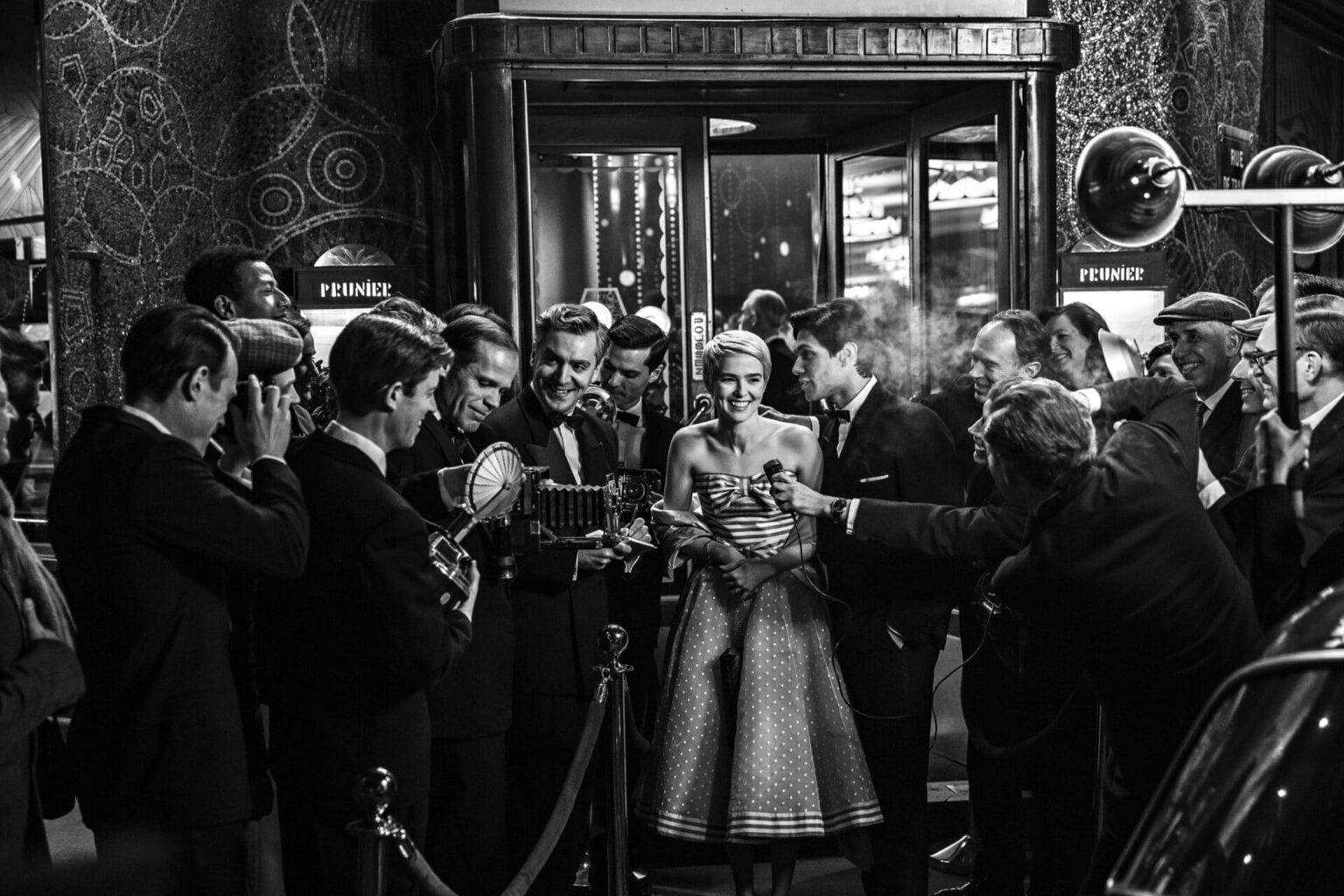
In a recent conversation for CULTURED magazine, Linklater and Deutch reflected on a journey that began nearly ten years ago on the set of Everybody Wants Some!! (2016).
- The Vision: Linklater first pitched the role to a 19-year-old Deutch after noticing her striking resemblance to Seberg. “I called this a long time ago,” Linklater remarked. “I told you, ‘Hey, I’m going to do this thing and you look like Jean Seberg—I think you can do it.’”
- The Evolution: Deutch, now 29, described the experience of reuniting with Linklater as a full-circle moment. She noted that while Linklater’s calm, systematic methodology remained unchanged, she felt more “present” and grateful to learn from him as an adult than she had as a teenager.
- The “Bubble”: The production was unique for the pair—the only two Americans on an entirely French crew. Linklater described the experience as a “nice bubble,” while Deutch admitted it was “scary” to navigate the French language and Seberg’s specific, graceful physicality.
The “Punk-Rock” Ethos of Breathless
Despite being “old in cinematic years,” Linklater insists that Breathless retains a “punk-rock ethos” that still feels startling today.
- Breaking the Fourth Wall: Linklater cited the moment Jean-Paul Belmondo looks directly at the camera to insult the audience as a level of irreverence that is still rarely matched in modern film.
- The New Icons: Linklater admitted that during the shoot, his leads—Deutch and Aubry Dullin—effectively became Seberg and Belmondo for him. “I’m still in a nice bubble we created that you are them. I prefer our characters,” he told Deutch.
A Decade in the Making: The Linklater & Deutch Reunion
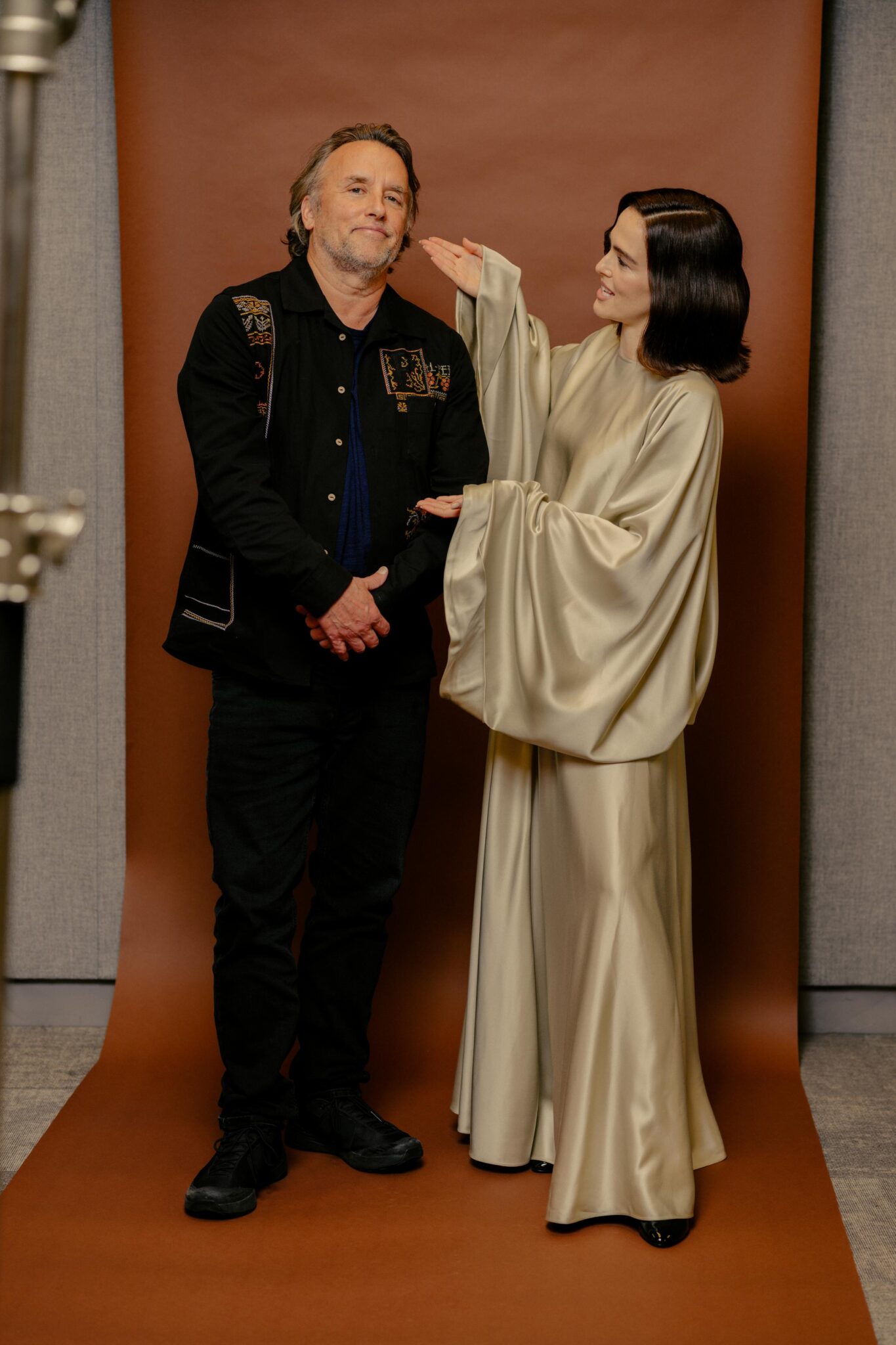
In a recent conversation for CULTURED magazine, Linklater and Deutch reflected on a journey that began ten years ago on the set of Everybody Wants Some!! (2016).
- The Vision: Linklater first pitched the role to a 19-year-old Deutch after noticing her striking resemblance to Seberg. “I called this a long time ago,” Linklater remarked. “I told you, ‘Hey, I’m going to do this thing and you look like Jean Seberg—I think you can do it.’”
- The Evolution: Deutch, now 29, described the experience of reuniting with Linklater as a full-circle moment. She noted that while Linklater’s calm, systematic methodology remained unchanged, she felt more “present” and grateful to learn from him as an adult.
- The “French Bubble”: The production was unique for the pair—the only two Americans on an entirely French crew. Linklater described the experience as a “visual art project” and a “nice bubble,” while Deutch admitted it was “scary” to navigate the French language and Seberg’s specific, graceful physicality.
Understanding Godard: Artistry and “Neurodivergence”
A fascinating throughline of the film is Linklater’s defense of Jean-Luc Godard, who is often portrayed in film history as a difficult or cold figure. Linklater offered a modern psychological lens on the director’s notorious reputation:
- The Spectrum of Genius: Linklater suggested that Godard’s social difficulties might have been a result of being neurodivergent. “I think he’s just dealing with his own neurodivergence,” Linklater told Deutch. “He was not a dark-hearted guy. He was just a heady guy who saw his point to be critical of everything.”
- The Critic’s Nature: Linklater argued that Godard was “a critic by nature” who wasn’t always attuned to others’ feelings, leading to inadvertent social friction that was misinterpreted as malice.
Awards Buzz and Nominations
As the 2026 awards season kicks off, Nouvelle Vague has emerged as a critical darling with significant accolades:
- Golden Globes: The film has earned a nomination for Best Motion Picture – Musical or Comedy.
- Lumière Awards: Proving its international appeal, the film leads the French Lumière Awards with five nominations, including Best Film, Best Director, and Best Male Revelation for newcomer Guillaume Marbeck (who plays Godard).
- Independent Spirit Awards: Zoey Deutch has secured a nomination for Best Supporting Performance, following her Breakthrough Performance Award at the Savannah Film Festival.